Dehydrator trays and liners: check fit before you buy
Distinguish racks, mesh inserts and solid fruit-leather sheets, then verify model compatibility and permitted care.

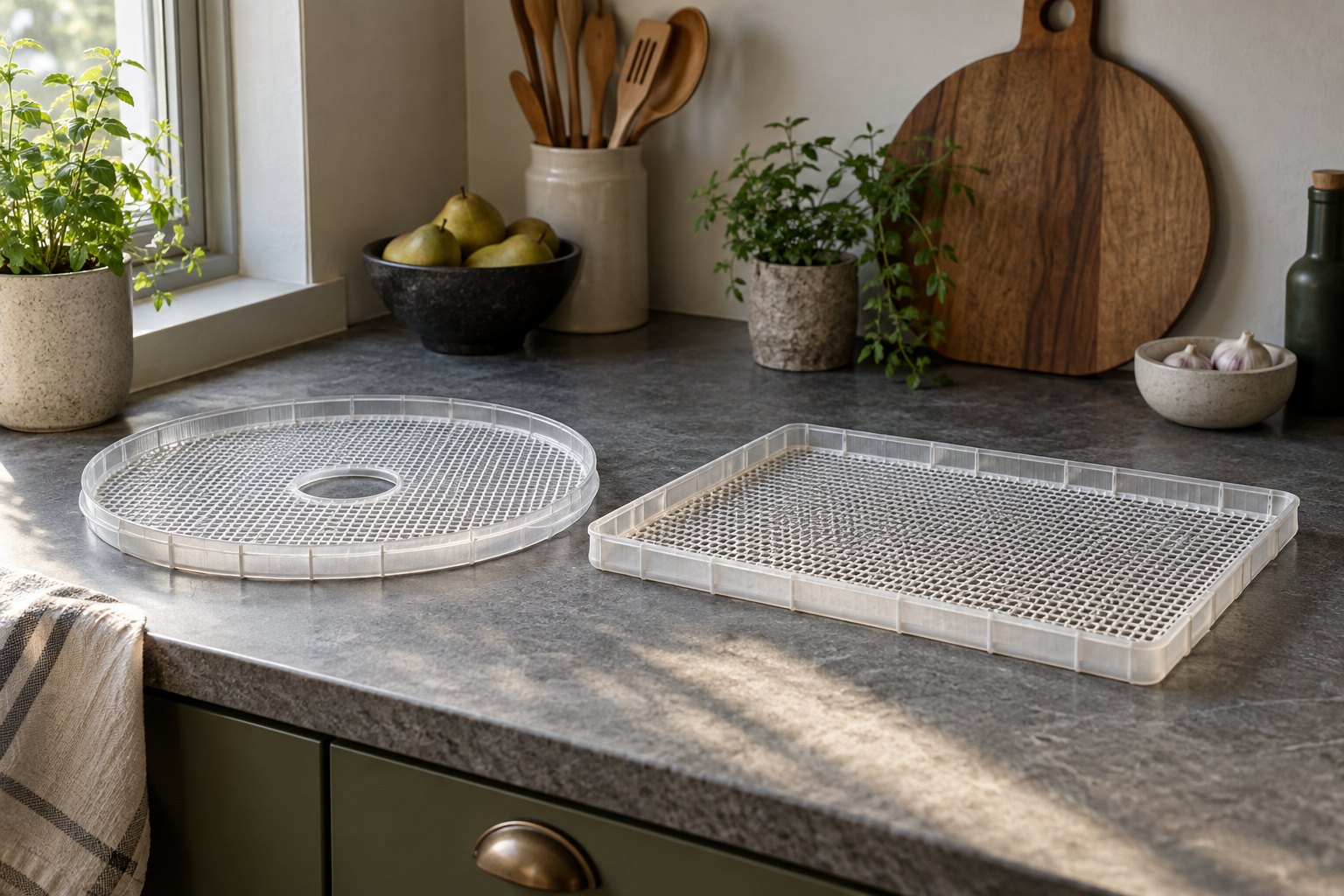
Start from your dehydrator's exact model and the job: a spare tray carries the load, a mesh screen holds small pieces and a solid sheet holds purée. Then check the size, center hole, airflow and care rules before you order.
An accessory only earns its place if it suits your machine and the job. A mesh screen, a replacement tray and a solid puree sheet are not three names for the same part. Start with your dehydrator's exact model and what you want to dry, then check size, support, airflow, material and cleaning before you order a spare or a multipack.
Our rankings for this: food dehydrator trays and dehydrator sheets and mesh mats.
Affiliate disclosureAs an Amazon Associate we earn from qualifying purchases made through links on this page. Commissions never change our ratings.
Name the job before choosing the material
For small pieces, the question may be how to keep food supported as it dries. For puree, it is how to contain a liquid layer. For a cracked rack, you need an approved structural replacement, not just a flexible sheet placed over the damage. Naming the job first helps you avoid comparing accessories that solve different problems.
Make a short note of what the existing part does well and why you need another one. Are you replacing a worn surface, preparing a different food or trying to increase capacity? The last reason requires a separate check: a spare tray does not mean the appliance is approved to operate with additional levels. Read the manufacturer’s allowed configuration before buying for expansion.
Source: COSORI: User manuals - select the exact model.
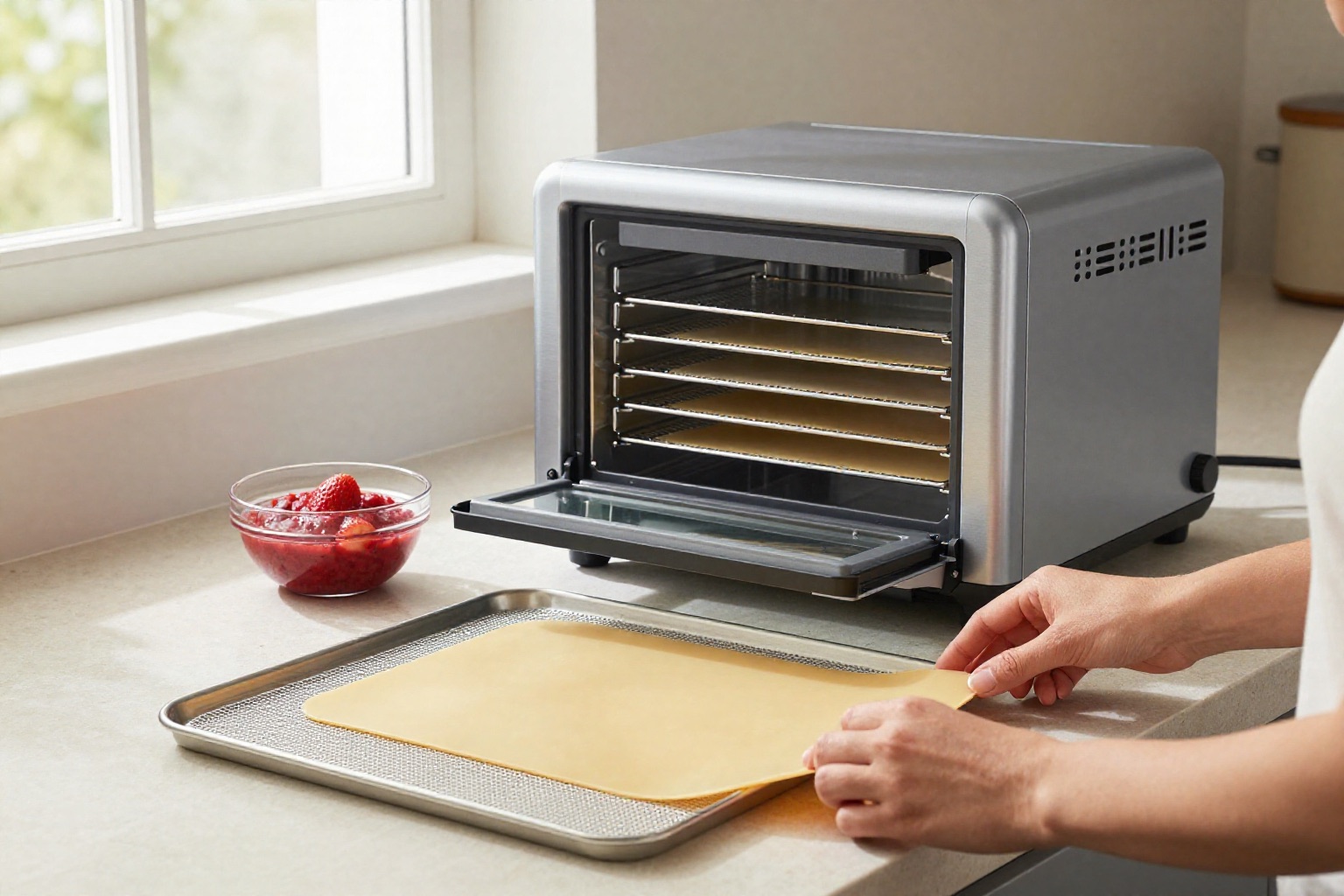
Record the exact appliance and part identifiers
Look for the model label on the appliance and the part description in its manual. A brand name or front-panel appearance can cover several generations with different dimensions. Keep a photograph of the model label for your own reference, but do not assume that an online product photograph displays the same variant.
When opening a listing, compare the selected size and quantity with the description, including whether the tray itself is included or only a liner. The accessory options linked here are shopping paths, not certified pairings with other catalog items. If you are still choosing the machine, read the dehydrator selection guide and check the accessory ecosystem as part of that decision.
Measure the usable shape, including openings
A single width measurement is not enough for every tray. Note length, depth, corner shape, center holes, raised edges and how the tray sits on rails or supports. Check the accessory’s stated dimensions against the exact permitted application, rather than declaring compatibility because two measurements are close.
Do not cover a vent or required gap simply to use the entire surface. The NCHFP equipment overview emphasizes the role of heat and moving air in a dehydrator. Your model’s manual defines how its trays and inserts are arranged. A liner that physically enters the compartment may still be unsuitable for the intended airflow.
Source: NCHFP: Food Dehydrators.

Separate food-contact claims from appearance
A shiny rack is not proof of a particular alloy, and the word silicone is not a complete specification for a liner. Look for the manufacturer’s declared intended use, temperature limits and food-contact information for that exact accessory. Do not infer those facts from color, flexibility or a similar-looking product owned by someone else.
For fruit leather, consult our puree-sheet guide before choosing a solid liner. For herbs, the herb guide explains the support questions for small leaves. These guides define the task; they do not approve a generic material or authorize a substitution that conflicts with the appliance instructions.
Check washing, storage and replacement rules
Ask whether the accessory can be washed by hand, placed in a dishwasher or soaked, and follow the exact instructions. Different components in the same package may have different care requirements. Avoid assuming that the tray’s cleaning directions automatically apply to a coating or flexible insert that sits on top of it.
Consider where the part will dry and be stored without distortion. A large liner that is awkward to wash or keep flat may make your routine harder even if it fits the dehydrator. Inspect parts as the maker directs and replace damaged components with approved replacements. We do not offer a universal repair method for cracked trays, flaking coatings or torn sheets.
Source: COSORI: User manuals - select the exact model.
Use a six-item purchase check
Before ordering, confirm the appliance model, accessory identifier, intended food task, supported shape, operating limits and permitted cleaning method. Save the listing details that identify the chosen variant. If one of those essential points remains unclear, ask the manufacturer or seller for the exact information instead of treating a favorable review as proof.
When the accessory arrives, compare the delivered part with what you ordered before using it with food.
- Follow any first-use washing instructions and check only the empty mechanical fit as directed.
- A neat fit is one check, not the whole safety case.
- Keep the packaging or instructions where you store the appliance manual, so future replacement purchases do not restart the same uncertainty.
For measured batch-space planning, use the tray layout estimator. Its result is a space estimate only, not a processing time or safety approval.
| Section | Key point |
|---|---|
| Name the job before choosing the material | Read the manufacturer’s allowed configuration before buying for expansion. |
| Measure the usable shape, including openings | A single width measurement is not enough for every tray. |
| Separate food-contact claims from appearance | For fruit leather, consult our puree-sheet guide before choosing a solid liner. |
| Check washing, storage and replacement rules | Different components in the same package may have different care requirements. |
| Use a six-item purchase check | Save the listing details that identify the chosen variant. |
Our rated picks
Done reading? Here are the three best-rated picks from our food dehydrator trays ranking, scored on buyer ratings, review volume and specs.


Product images: Amazon listings
Frequently asked questions
What is the difference between a dehydrator mesh and a fruit roll sheet?
A mesh screen has small holes so air moves while small pieces stay put; a fruit roll sheet is solid and holds purée and liquids. Most kitchens end up with one of each.
Are silicone dehydrator sheets worth it?
If you make fruit leather or sticky jerky often, yes: they are reusable and peel easily. Compare them in our best dehydrator sheets ranking.
How do I know if a liner fits my dehydrator?
Compare the stated size with your tray, check for a center hole and make sure it leaves the vents clear. A listing that names your exact model is the safest bet.