Dehydrator temperature and food safety: what the dial cannot tell you
Understand drying settings, food-specific preparation and the limits of timers, presets and temperature displays.

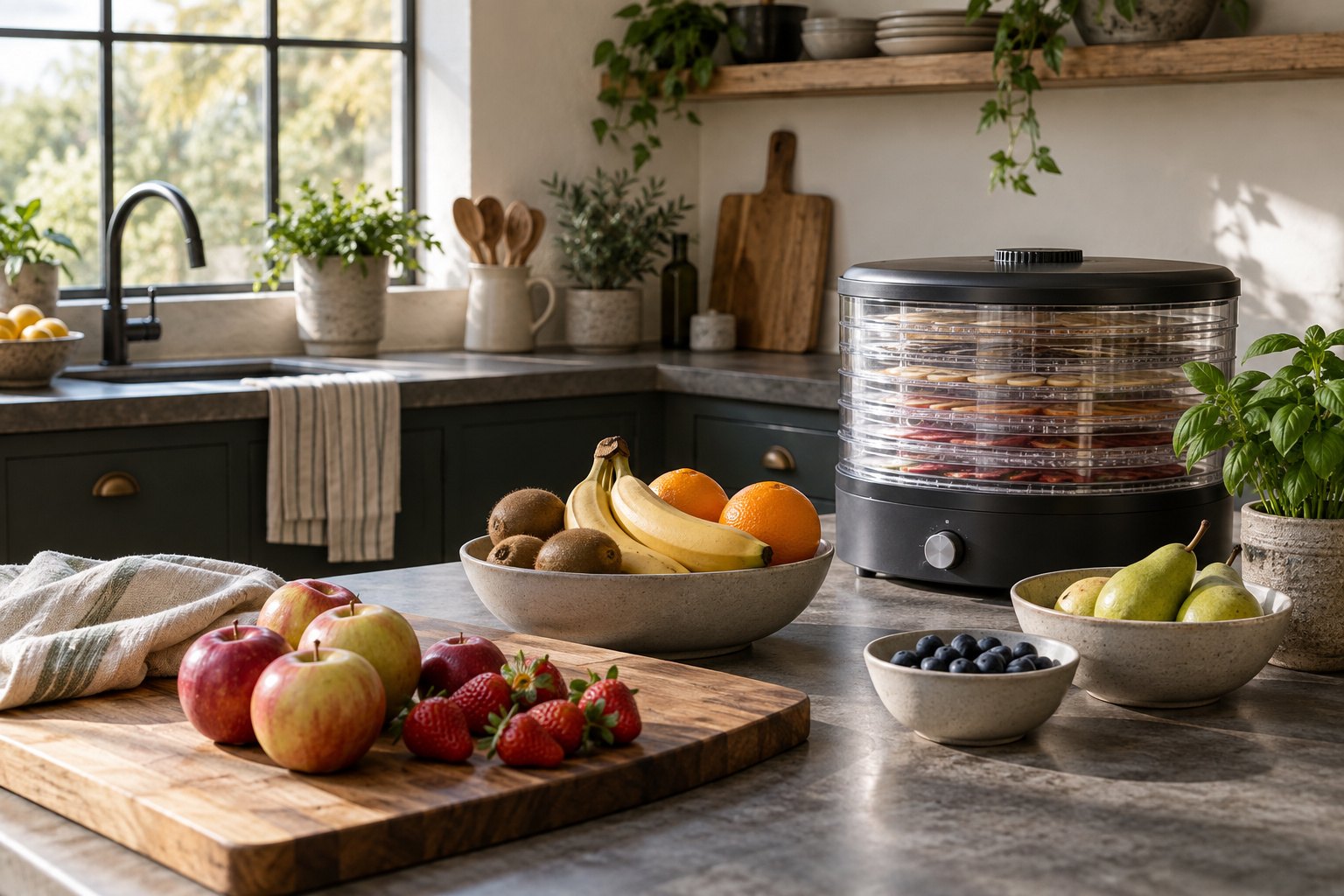
Use the temperature your food's published method gives (NCHFP starts herbs at 95 to 115 °F; the USDA jerky method heats meat to 160 °F, then dries at 130 to 140 °F) and treat the dial as an air setting, not the food temperature. A thermometer and the method decide, not the preset.
The number on the dial is a setting, not a safety guarantee. It doesn't tell you the internal temperature of a strip of beef, how much moisture is left in an apple ring or how the finished batch should be stored. Pick the food-specific instructions first, then check that your dehydrator can actually run within them.
Our rankings for this: digital food dehydrators and dehydrators for herbs.
Affiliate disclosureAs an Amazon Associate we earn from qualifying purchases made through links on this page. Commissions never change our ratings.
Separate the four questions
A drying plan has four different questions: how to prepare the food, what conditions to use during drying, how to judge its endpoint and what storage conditions follow. A single preset cannot answer all four. Read the entire preservation method before starting, including any preparation or post-drying step that happens outside the machine.
Make a brief worksheet with a space for each answer and its source. If the recipe only says to dry for a certain number of hours, look for the missing preparation and storage information. A social-media picture of a finished snack is not the same as a validated process. This distinction is especially important when someone suggests substituting a different food into an existing method.
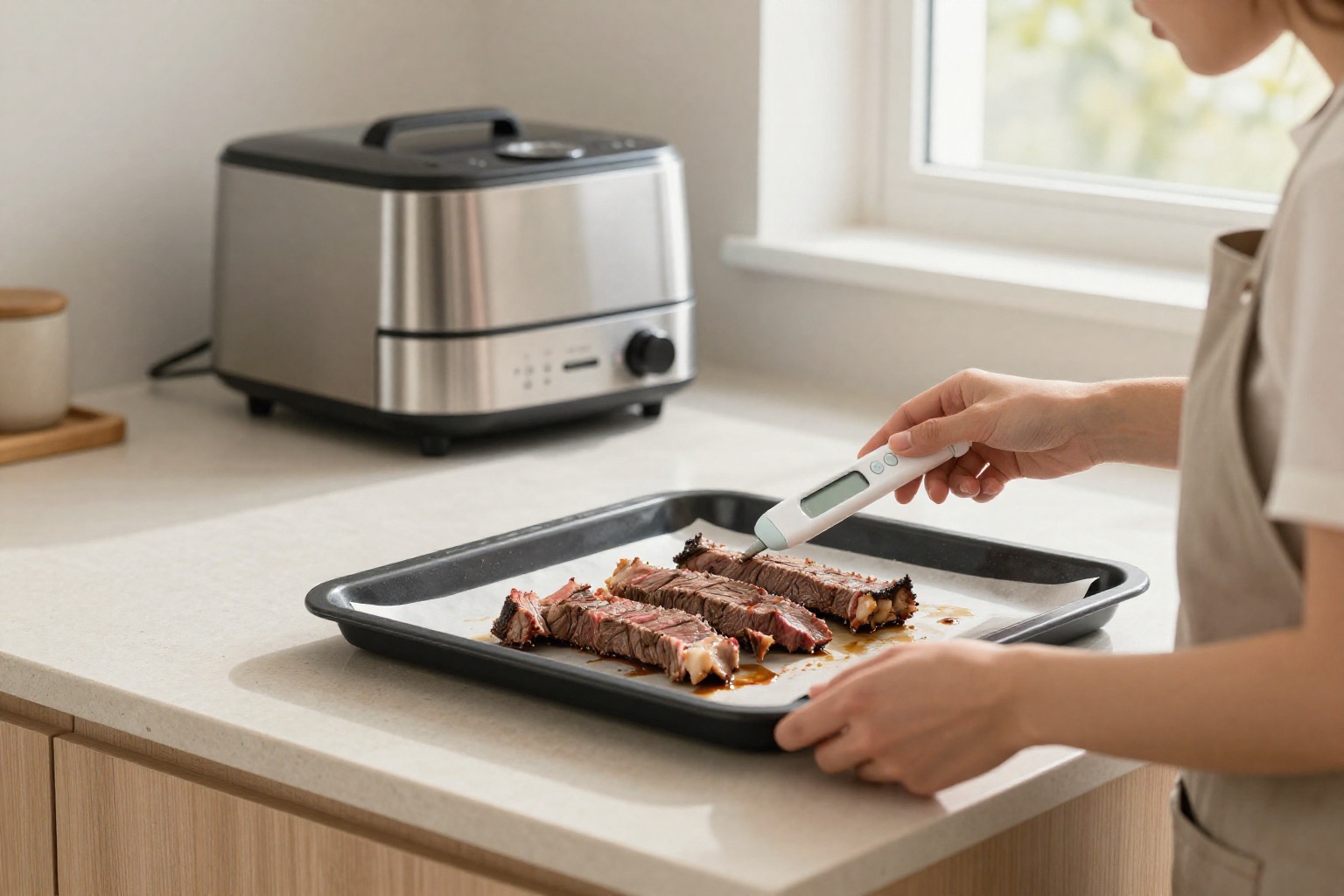
A meat safety step is not a drying setting
USDA recommends heating meat to an internal 160°F and poultry to 165°F before dehydration for its home jerky guidance. A dehydrator dial at those numbers is not evidence that the food itself reached them. Read the complete USDA process and use an appropriate food thermometer rather than assuming the air setting proves a kill step.
Do not combine fragments from unrelated methods to create a shortcut. If a manufacturer recipe and public-health advice appear to disagree, resolve that discrepancy before processing the food. Our jerky food-safety guide focuses on the decisions and equipment checks involved; it does not certify an appliance as a safe jerky system.
Source: USDA FSIS: Jerky and Food Safety.
Herbs illustrate why one setting does not fit all
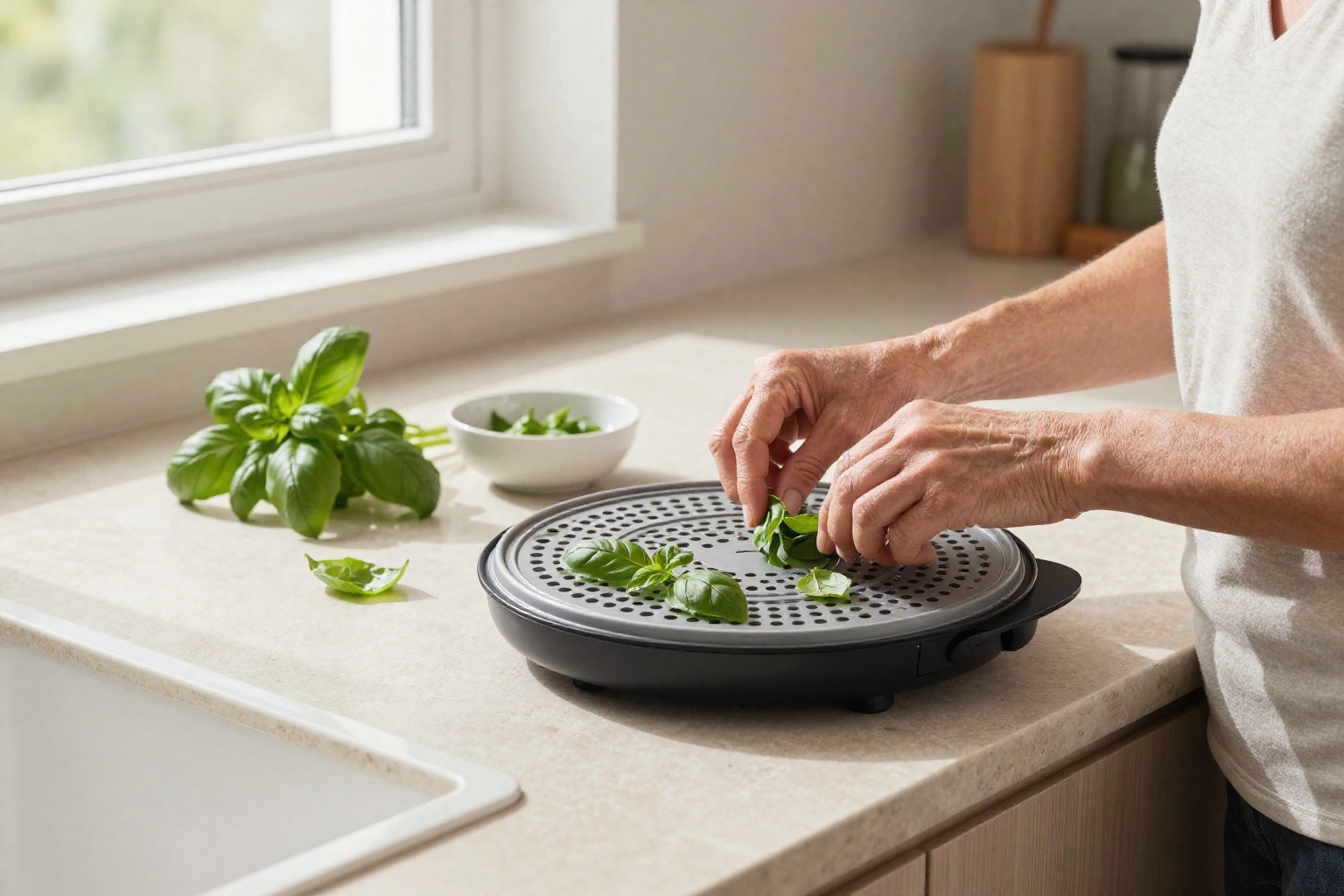
NCHFP describes a lower-temperature range for dehydrator herbs than many fruit-drying methods. That makes the bottom of the thermostat range a meaningful buying detail. It also means that a machine advertised mainly around its maximum temperature may not answer your actual requirement. Check the exact model rather than assuming every appliance has the same controls.
A sensible shopping question is whether the manual supports the food and process you plan to use. Another is whether you can inspect the tray without an awkward loading routine. For herb-specific preparation and endpoint checks, use the herb drying guide. Keep these instructions separate from meat preparation even if the same machine is used at different times.
Source: NCHFP: Herbs.
Time is a planning estimate, not an endpoint
The thickness and arrangement of a batch are part of its preparation, so note them before the cycle begins. A timer is useful for scheduling an inspection or stopping the appliance as its manual describes. It is not a sensor for every piece of food. Avoid making the calendar more important than the actual method simply because the kitchen needs to be cleared at a particular hour.
For your first batches, choose a time when you can check progress. Keep the source instructions nearby and record what you observe without treating that log as a replacement for food-safety guidance. A previous successful batch helps you organize your work; it does not validate a different ingredient, thicker cut or altered loading pattern.
Equipment checks need the exact manual
Read the placement, ventilation and loading instructions for your appliance. Follow the permitted tray count and the directions for liners or drip sheets. There is no universal clearance distance or accessory arrangement that applies to every dehydrator, so we do not invent one. If the manual requires a particular inspection or temperature-verification method, follow that method.
If controls behave unexpectedly, a fan fails to operate normally or the appliance displays an error, stop and consult the maker’s troubleshooting instructions. Do not compensate by guessing a new food-processing time. Read the cleaning and inspection guide before the next batch, particularly if residue or damaged parts could interfere with normal operation.
Source: COSORI: User manuals - select the exact model.
Storage belongs in the safety plan
Decide how you will handle the finished food before loading the first tray. Have suitable containers ready and keep batch identity clear. This avoids a rushed decision at the end of a long cycle when several trays finish at different times. Refer to the preservation source for cooling, conditioning where applicable, packaging and storage.
Do not promise shelf stability merely because a piece feels dry or because you own a vacuum sealer.
- Packaging does not validate an incomplete drying method.
- If you cannot establish what process was followed for a batch, an attractive appearance is not enough to resolve the uncertainty.
- For practical organization, start with our storage guide and retain the original food-specific source alongside your notes.
For measured batch-space planning, use the tray layout estimator. Its result is a space estimate only, not a processing time or safety approval.
| Section | Key point |
|---|---|
| Separate the four questions | A single preset cannot answer all four. |
| Herbs illustrate why one setting does not fit all | For herb-specific preparation and endpoint checks, use the herb drying guide. |
| Time is a planning estimate, not an endpoint | It is not a sensor for every piece of food. |
| Equipment checks need the exact manual | Do not compensate by guessing a new food-processing time. |
| Storage belongs in the safety plan | Packaging does not validate an incomplete drying method. |
Our rated picks
Done reading? Here are the three best-rated picks from our best food dehydrators ranking, scored on buyer ratings, review volume and specs.

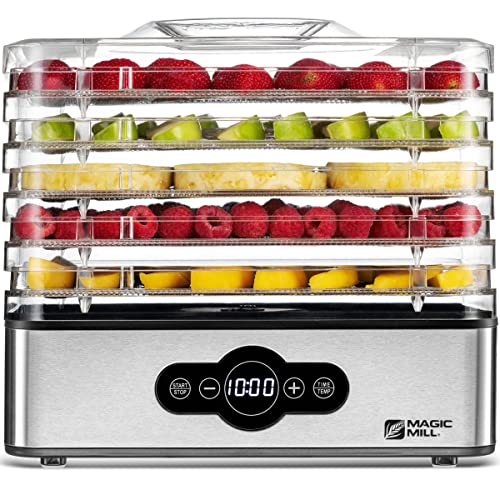

Product images: Amazon listings
Frequently asked questions
What temperature should a food dehydrator be set at?
It depends on the food: about 95 to 115 °F for herbs (NCHFP), about 140 °F for most fruit and vegetables (NCHFP), and 130 to 140 °F for jerky after the meat has been heated to 160 °F (USDA). Follow the method for your food.
Is the dehydrator dial accurate?
It is the air setting the maker designed for, not a measurement of your food. Air temperature varies between trays and the food stays cooler while it still holds water, so check doneness the way the method describes.
Do I need a dehydrator that reaches 160 °F?
Not necessarily. The USDA heat step for jerky can be done in the oven before drying; the dehydrator then has to hold 130 to 140 °F. A machine that goes higher gives you more options.